Government Proposal Ready | Kolkata Anchor Project

Dead Car Restoration

A one-hub, city-scale platform to convert ageing petrol and diesel vehicles into future-ready EVs while building a new charging, research, and clean-mobility industry for Kolkata.

Engineered with German technology and international experts from Russia and South Korea, DCR is positioned as a flagship EV conversion ecosystem for private owners, heritage vehicles, small businesses, and light industrial fleets.

Legacy car restoration Light truck electrification Charging ecosystem Research and skills base
LFP chemistry Solid-state roadmap OTA ecosystems ADAS-ready systems Frugal architecture 800V / 900V platforms Charging network rollout
Project Vision

Restore road use, retain ownership value, and create a new clean-mobility cluster

Many ageing vehicles face shrinking practical use because of emissions pressure, roadworthiness concerns, parts scarcity, and evolving operating restrictions. DCR proposes an EV conversion path that preserves utility and emotional attachment while creating manufacturing and service demand inside Kolkata.

The problem DCR addresses

Owners of old diesel and petrol vehicles often face a forced choice between scrapping, parking, or losing access to city use. Small operators and families lose mobility value, and cities lose a chance to redirect those assets into a cleaner future.
The DCR response

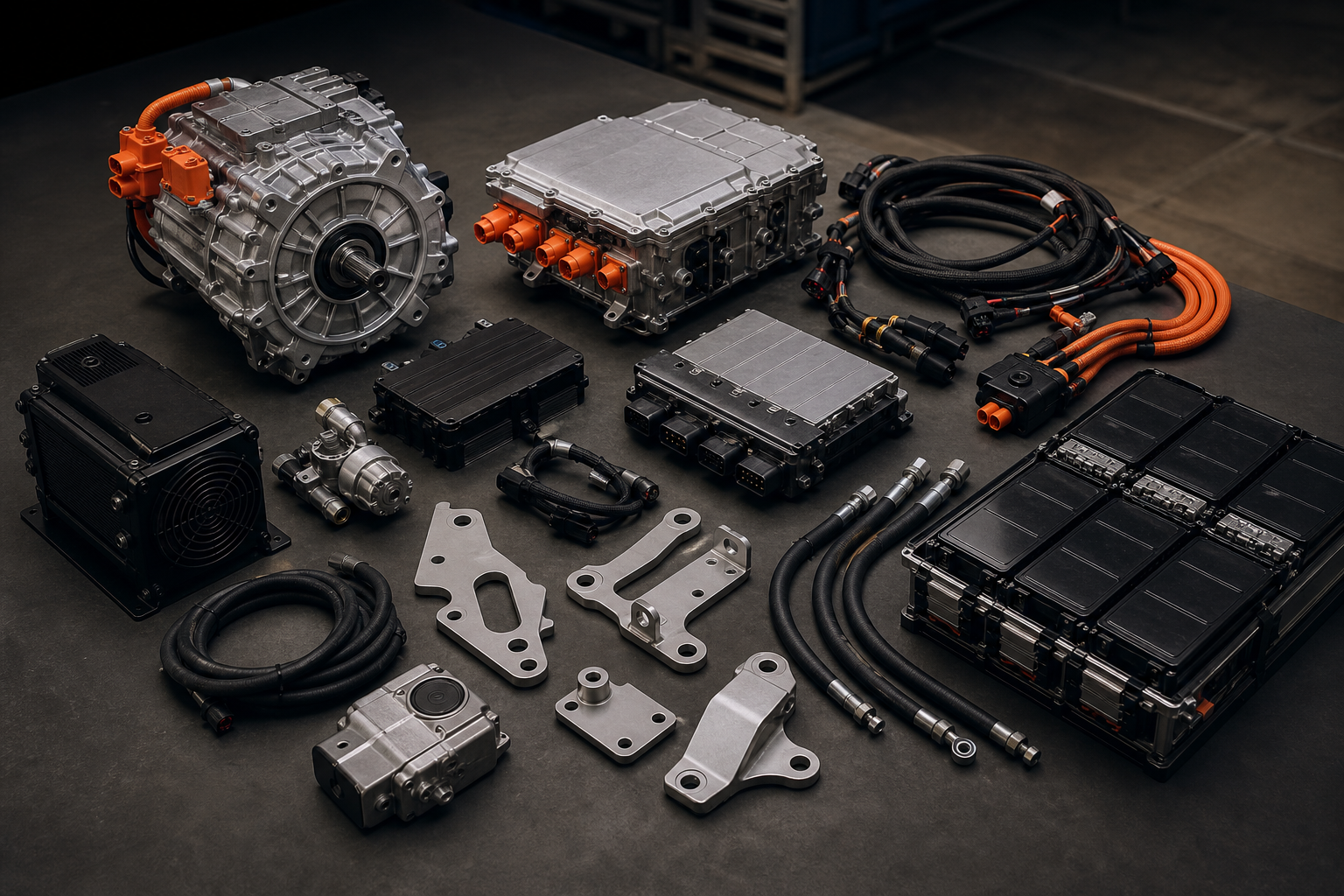
DCR converts selected vehicles into electric platforms using modular kits, battery packs, power electronics, calibration, validation, charging access, and after-sales digital support under one umbrella.

Proposal-ready scope

  • Private sentimental car restoration with EV powertrain conversion
  • Retrofit pathways for light commercial pickups and industrial carriers
  • Charging plazas and fleet charging support under DCR branding
  • Skilling, testing, and research functions built into the same campus
Technology Stack

A modern retrofit platform built for today and designed for the next EV cycle

The DCR architecture pairs available conversion hardware with a roadmap toward faster charging, safer electronics, richer software, and higher-voltage commercial applications as market readiness and approvals evolve.

LFP Chemistry Solid-State Direction OTA Systems ADAS Ready Frugal Architecture 800V / 900V

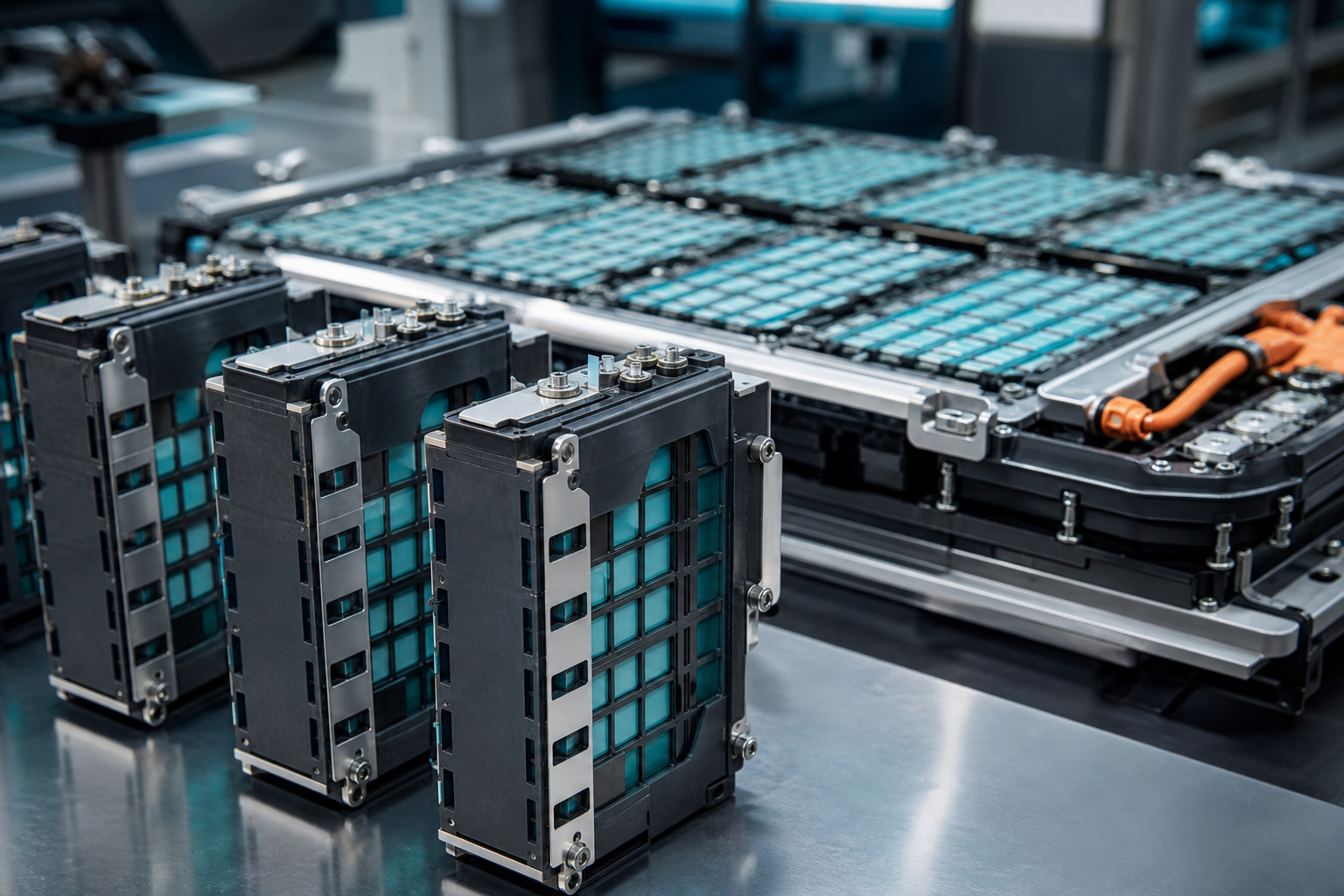
The base platform is centered on robust lithium iron phosphate battery systems, modular conversion hardware, and software-managed support services. The broader roadmap also considers future solid-state cell integration, high-voltage architectures, and digital vehicle intelligence where commercially and regulatorily viable.

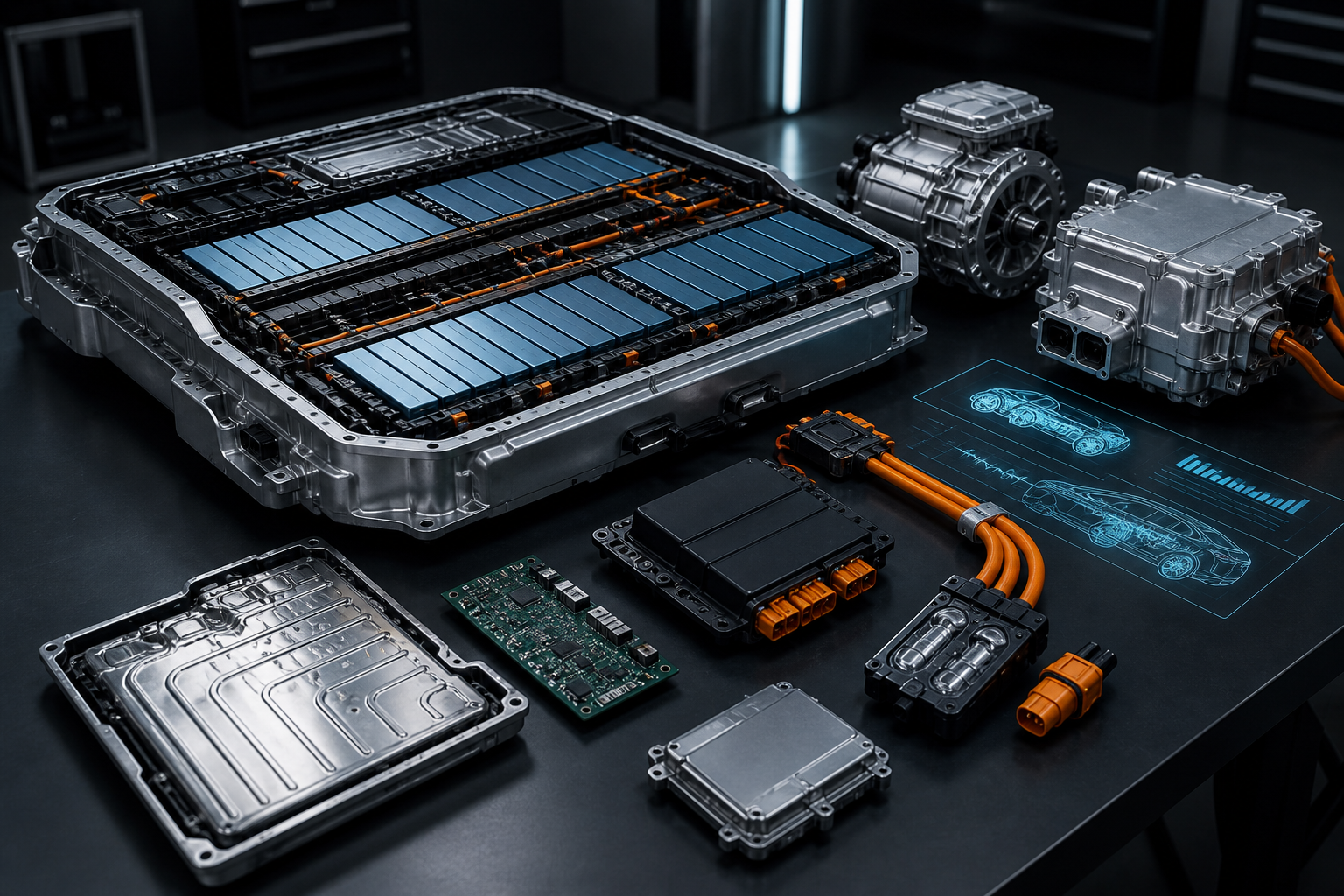
Advanced EV battery pack and power electronics laid out on a workshop table.

LFP battery systems

Safety, thermal stability, repeatable operating performance, and longer usable life make LFP a sensible conversion baseline for Indian conditions.

Solid-state roadmap

DCR can position itself to evaluate next-generation cell formats that aim to raise range and compress charging windows once supply and certification mature.

OTA ecosystem

Connected diagnostics, calibration updates, battery-health monitoring, and service notifications improve long-term ownership confidence.

ADAS-ready integration

Sensor-friendly electrical architecture keeps future driver-assistance additions more practical for select premium and commercial applications.

Frugal engineering

Modular kits, localized assembly, and serviceable components help balance cost control with quality and maintainability.

800V and 900V potential

High-voltage pathways support the future case for faster charging, heavier-duty fleets, and more capable industrial transport conversions.

Conversion System

From stripped engine bay to validated EV platform

DCR is not only a kit supplier. The model is an end-to-end restoration and electrification workflow that combines mechanical conversion, battery integration, testing, and customer delivery support.

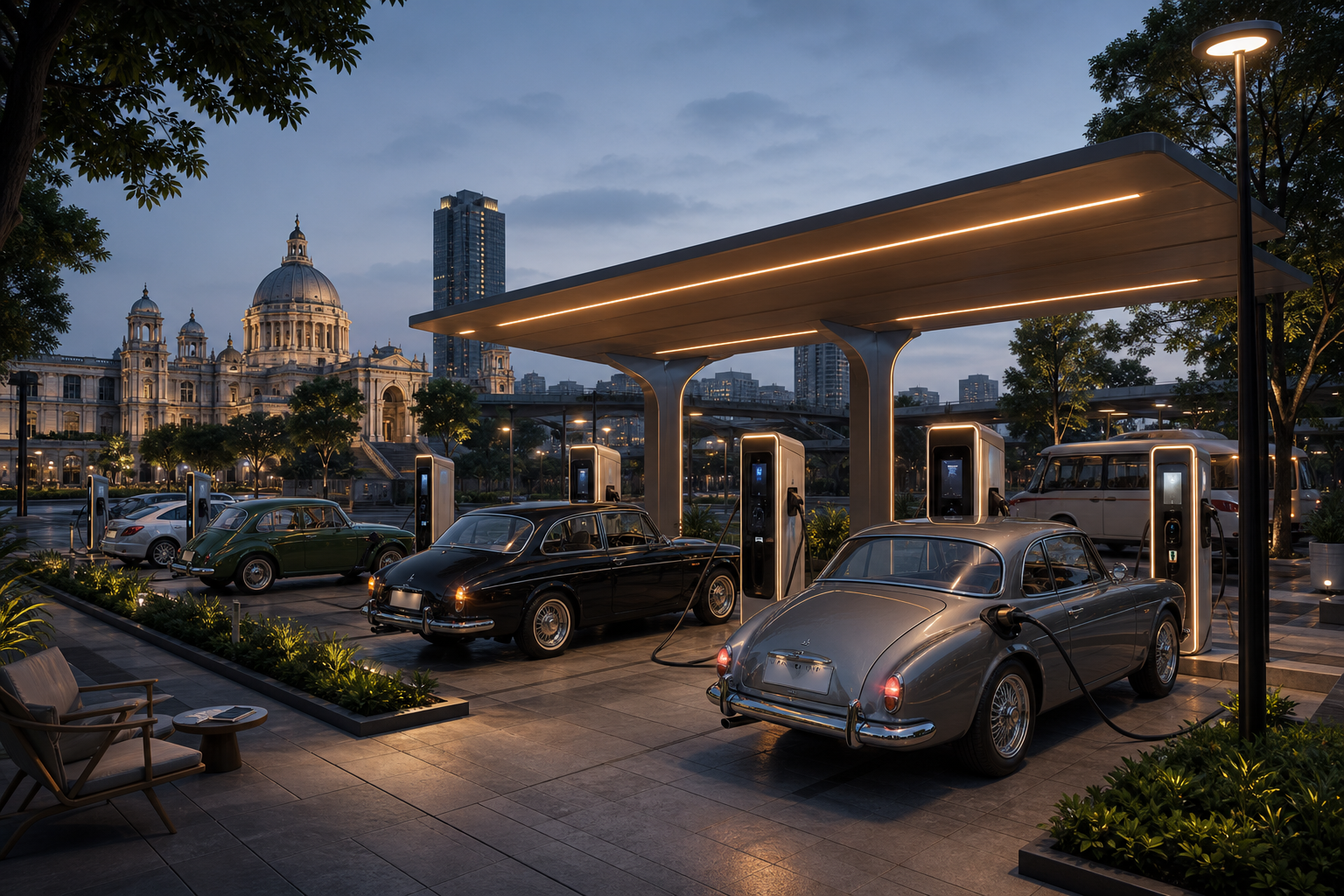
EV charging station with restored classic vehicles charging in an urban plaza.
Charging Ecosystem

DCR charging stations remove adoption friction for owners and fleets

The conversion story becomes credible only when drivers can charge easily. DCR can pair the Kolkata hub with branded charging plazas, service-linked charging nodes, fleet depot installations, and a digital support layer for payments, usage, and maintenance.

Urban access

Public-facing charging nodes near key city corridors, heritage districts, and destination clusters for converted private vehicles.

Fleet support

Depot-based charging packages for light industrial vehicles, pickups, and commercial operators converted through the DCR facility.

Service integration

Charging can be tied to predictive maintenance, OTA support, and battery-health checks to build trust in the retrofit lifecycle.

Proposal For Kolkata

A development agenda project for city mobility, industrial renewal, and public trust

DCR is positioned as a visible, citizen-facing industry project: it upgrades old vehicles, supports cleaner transport, creates jobs, and gives Kolkata a distinctive narrative in India’s EV transition.

Proposal Note

What DCR seeks from city and state stakeholders

  • Industrial land and utility facilitation for a flagship Kolkata conversion campus
  • Pilot support for heritage, municipal, or light commercial demonstration fleets
  • Coordination on charging permissions, mobility planning, and corridor visibility
  • Skilling partnerships with ITIs, polytechnics, and engineering institutions
  • Single-window engagement for approvals, testing interfaces, and project promotion

Vehicle conversions, deployment, and use remain subject to certification, homologation, and applicable central and state regulatory approvals.

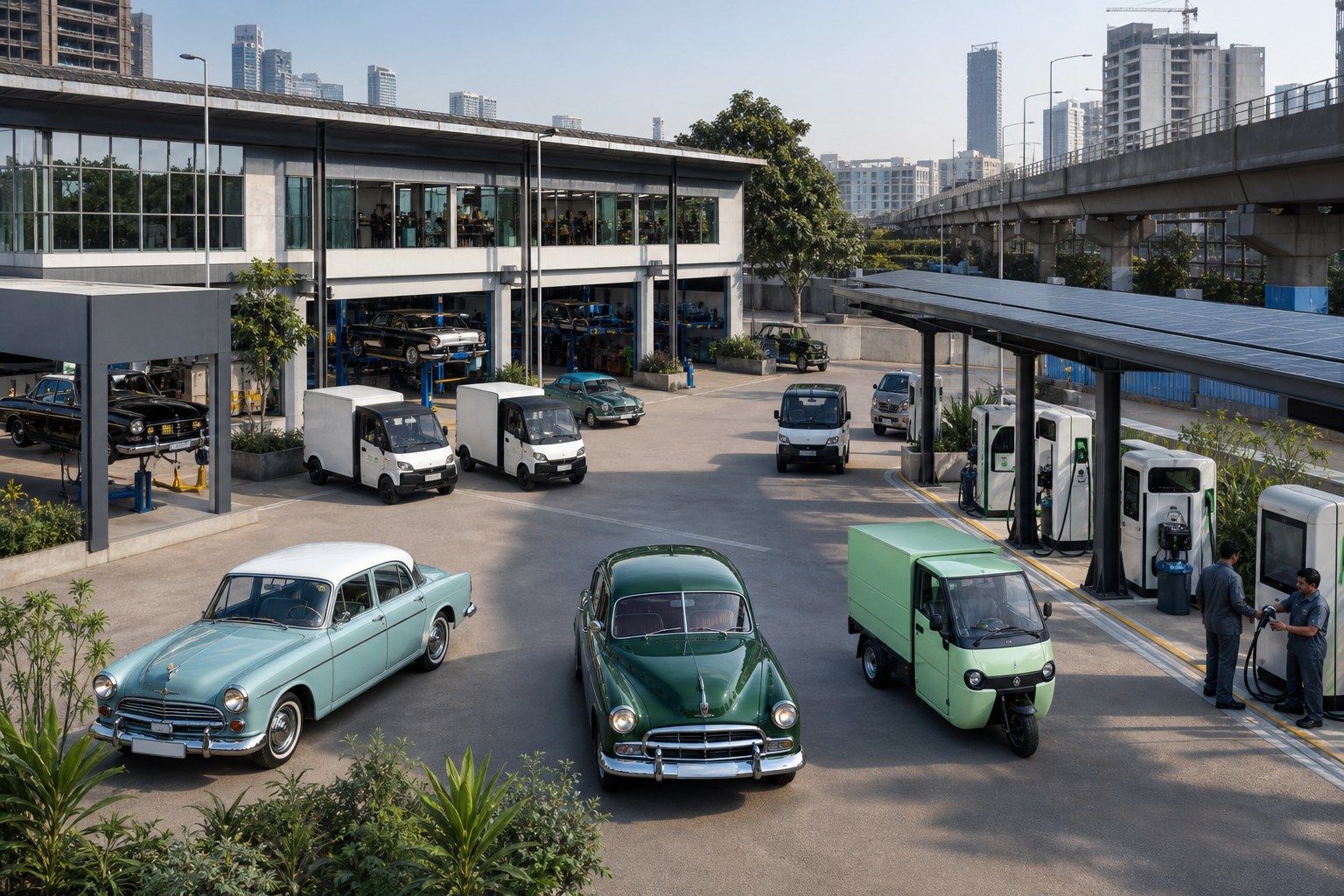
Urban EV conversion campus with restored cars and charging infrastructure.

Why this aligns with Kolkata’s development story

The project blends manufacturing, climate ambition, heritage preservation, entrepreneurship, and public-facing mobility improvement into one location that can be shown to investors, citizens, and visiting institutions.

City Benefits

What Kolkata government and the city ecosystem stand to gain

The upside is broader than vehicle conversion alone. DCR can add fiscal, social, industrial, and narrative value for the city if it is developed as a flagship hub.

Revenue and industrial throughput

Conversion services, component assembly, battery support, charging operations, annual maintenance, fleet programs, and training activity all expand the local clean-mobility economy.

Tax collection expansion

A formalized EV conversion and charging ecosystem can widen taxable service activity, payroll generation, vendor formalization, utility consumption, and industrial occupancy within the city economy.

Public support and civic goodwill

Citizens can keep beloved vehicles relevant again, while small operators recover working assets. That emotional restoration story can translate into strong public visibility and policy goodwill.

Cleaner urban mobility identity

Kolkata gains a differentiated clean-transport narrative that mixes heritage, circular economy logic, and future mobility manufacturing in one city-backed project.

Investment Opportunity

A conversion and fulfillment platform for future light commercial demand

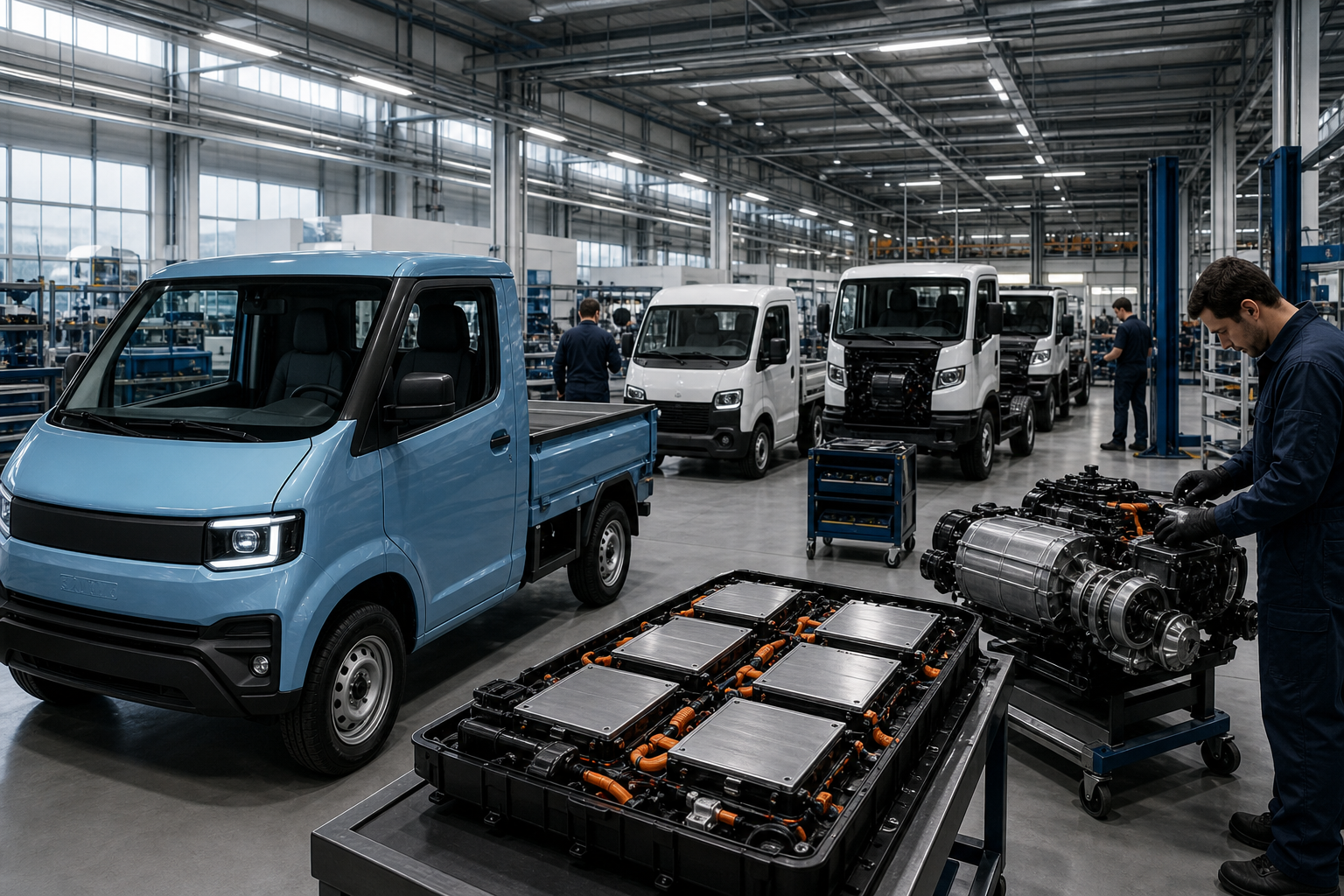
DCR can also serve the next layer of the market: pickups, small industrial carriers, and light commercial vehicles that need electrification without waiting for every use case to be met by fresh OEM supply alone.

Light industrial trucks being converted to electric platforms inside a factory.

Illustrative OEM and fleet outreach targets

Tata Motors Ashok Leyland BharatBenz Mahindra & Mahindra Eicher Trucks

The Kolkata facility can be positioned for pilot orders, fleet conversion programs, kit integration, validation support, and specialized retrofit operations for pickup and smaller industrial transport formats.

  • Pickup and small truck EV retrofit programs
  • Dedicated fleet pilot batches for industrial transport users
  • Conversion engineering, validation, and service network extensions
  • Charging plus maintenance contracts bundled with fleet rollout

Company names are shown as business-development targets for discussion and outreach, not as announced contracts, endorsements, or confirmed orders.

Youth Employment And Research

Build a future automobile skills and research hub in Kolkata

DCR can become a training ground for the next wave of EV technicians, software-led service teams, battery specialists, and retrofit engineers while creating a practical R&D base for India-focused mobility challenges.

EV assembly technicians Battery diagnostics teams BMS calibration engineers Charging operations staff CAD and validation support OTA service specialists Quality and testing teams Customer delivery managers

Research focus

Thermal management, battery lifecycle performance, retrofit packaging, India duty-cycle analytics, and commercial charging behavior.

Institutional value

The site can support collaborations with technical institutes, engineering colleges, and industrial training programs to create a durable local talent pipeline.

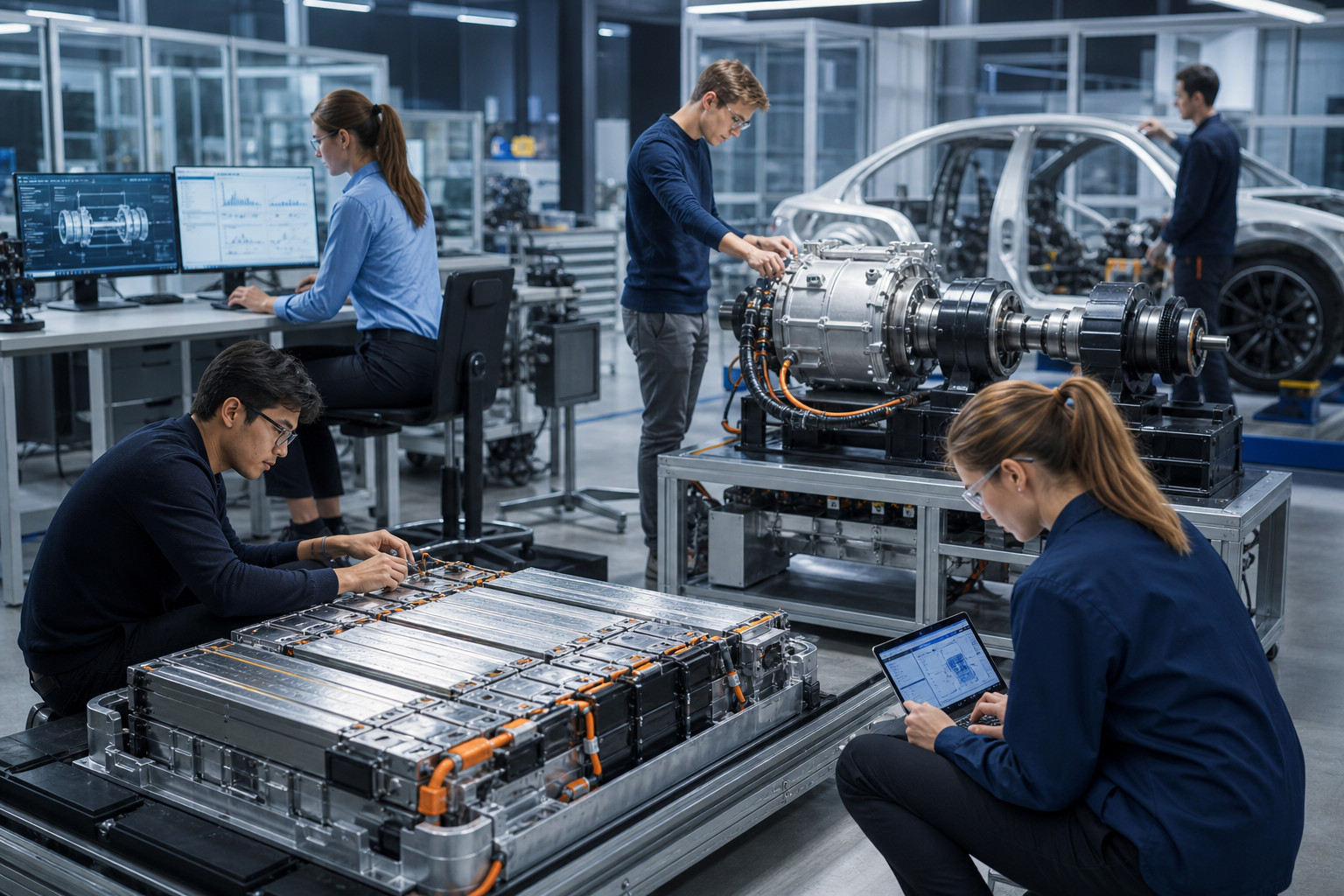
Engineers working in an EV research and battery development lab.
Key Stakeholders

The people behind the DCR vision

The project narrative brings together strategic leadership, technology direction, and execution planning around a Kolkata-first EV restoration and retrofit platform.

01

Anish Katyal

Project leadership, strategy, and anchor development direction for the Kolkata hub.

02

Roland

Technology and systems input aligned with DCR’s engineering and platform goals.

03

Mark

Commercial, operational, and ecosystem support for scaling conversion programs.

Next Step

Position DCR as a flagship development project for Kolkata’s next mobility chapter

This one-page site is designed to support government conversations, investor outreach, and partner presentations while the full proposal deck carries the longer narrative.